On the 20th day of Titan Dynamics‘ existence, a message came in on Discord from a unit of the US Air Force.
Not a formal procurement process, just a Discord private message. It turns out they had broken a $350,000 drone, so someone downloaded the design file from Titan Dynamics’ website and used a consumer-grade 3D printer to print out a replacement. After test-flying it, they found that the results were surprisingly good, so they went back to founder Mohammad Adib: “Do you do any government business?”
Adib and cofounder Noah Benton looked at each other. Two young men in their twenties: one is a serial entrepreneur who has been writing software for more than ten years, and the other is an aerospace genius who has been designing airplanes since high school. They knew nothing about defense procurement. But their answer was: “Sure, of course.”
As absurd as this moment may seem, it reveals something that is happening in the defense industry: when drones can be “printed” anywhere with $50 plastic, the traditional rules of the game no longer apply.
How Small Drones Are Disrupting Modern Warfare
The camera pulls back to the battlefield of Ukraine in 2022: a consumer-grade drone costing just a few hundred dollars, strapped with explosives, hits a multi-million dollar armored vehicle with pinpoint accuracy. These “poor man’s missiles” broke the monopoly of expensive weapons and revolutionized the cost structure of war. The US Army has also made a shift, with the “Drone Dominance” program, launching at the end of 2025, planning to procure 200,000 drones over two years, with the goal of lowering the unit price to US$2,000.
But here’s the problem: the traditional defense giants haven’t caught up. The “moat” of the past has become a stumbling block.
Adib uses a thought experiment to illustrate: suppose you send 10,000 drones to the front line, and when the enemy activates electromagnetic interference, the planes are instantly reduced to scrap metal. If you call a traditional supplier, they will have to redesign and remold the product, and it will take three to six months to deliver it. But on the battlefield, no one can wait that long.
From ZIP files to Air Power! Develop, Build, and Fly — All within 24 Hours
On the surface, this is a 3D printing drone company. But Adib’s definition is more precise. They are addressing two major pain points in traditional defense: supply chain concentration and speed of response.
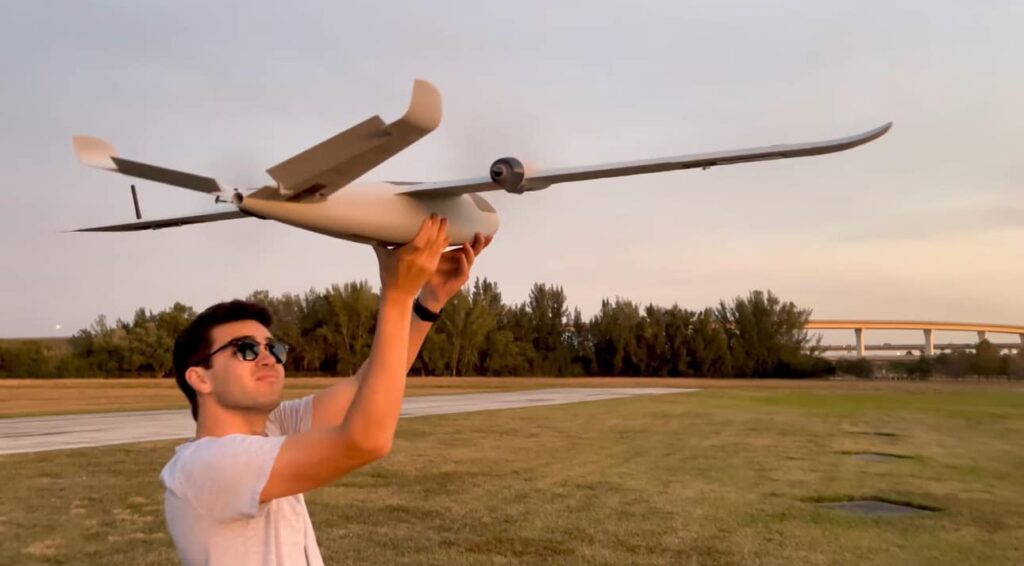
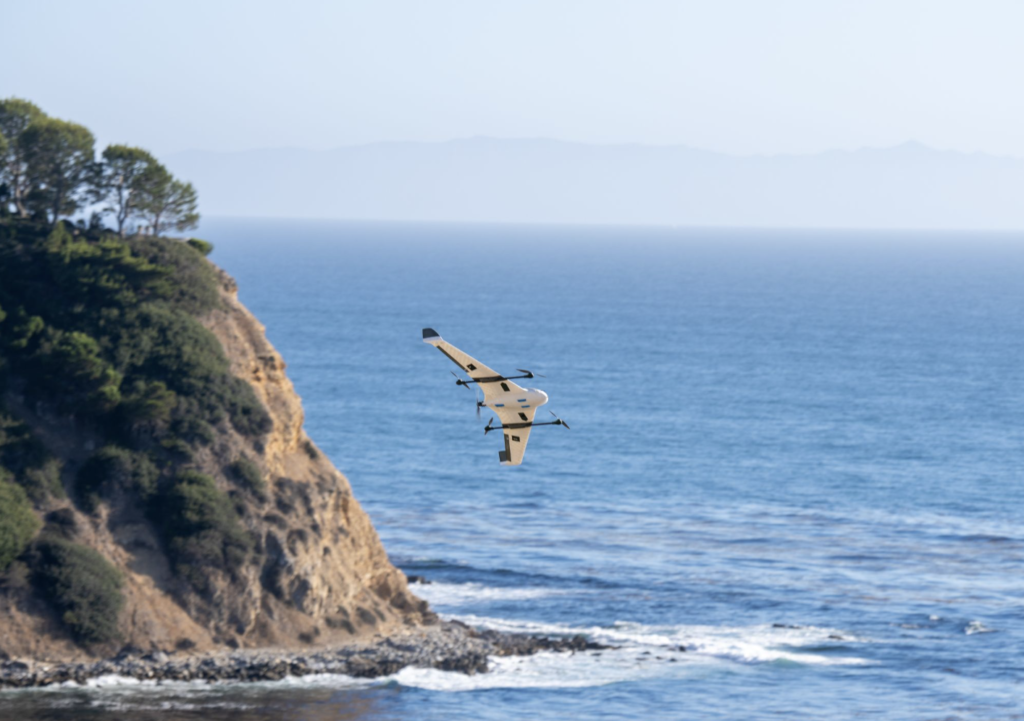
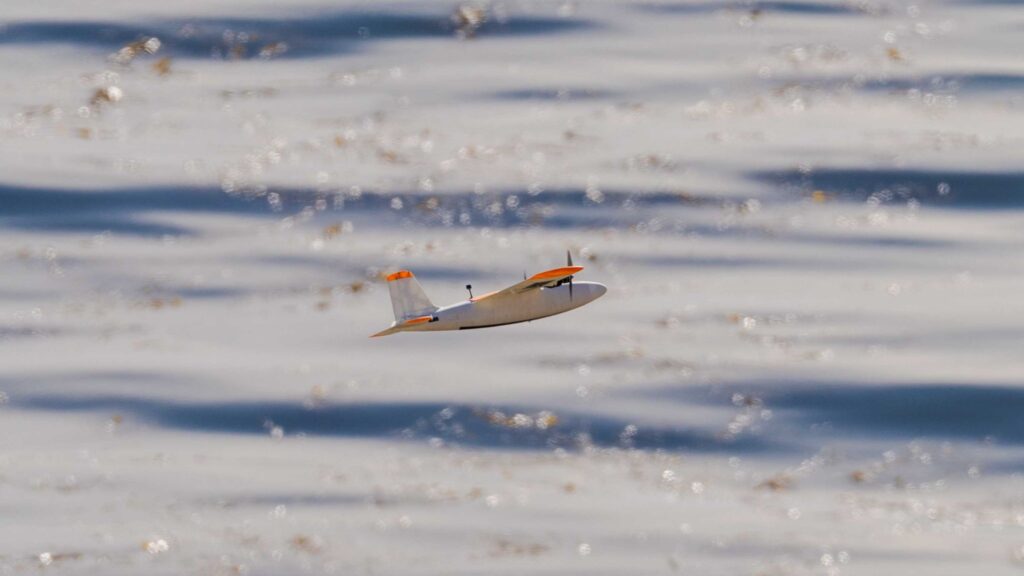
The first is hardware: more than 150 3D-printable drone designs, covering both fixed-wing and vertical take-off and landing models. Compared to traditional drones of the same size, Titan’s price is one-tenth or less, and once printed, it’s immediately clear how to assemble it.
The second is the Prometheus software. The system can design a drone from scratch in less than 10 minutes: the user enters the payload, range, and altitude, and Prometheus automatically creates the aerodynamic, structural, and electrical design. When faced with this task, Boeing and other major manufacturers said, “It’s either going to take ten years or ten billion dollars,” but Adib and his partners found a way through the open-source tools, and two months later, the fully automated design took off in what the US Air Force called the first “self-designed, constructed, and flown in less than 24 hours” aircraft experiment.
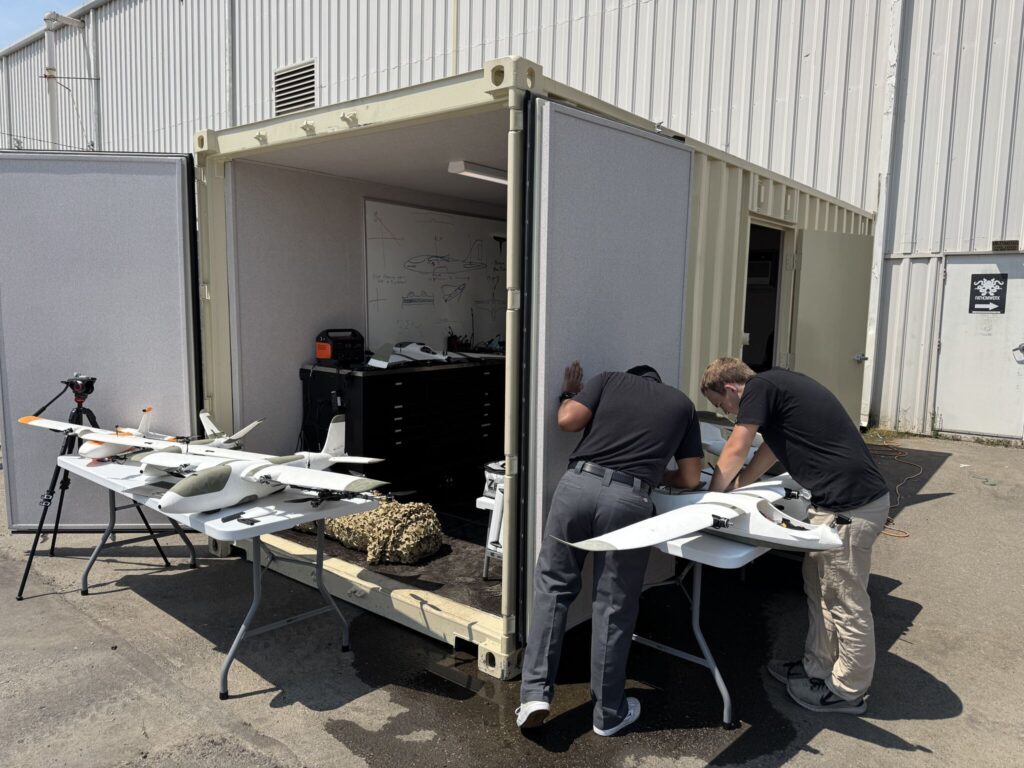
The third product,Vulcan, is the most science-fiction-movie-like aspect of the Titan Dynamics lineup. “It’s our whole company in one box!” Adib described it this way. It’s a mobile drone factory housed in a 20-foot container. It comes equipped with a 3D printer, tools, screen, table and chairs, and a thousand parts kits. It can be transported to any corner of the world by land, sea, or air. Open it up and start “printing” airplanes.
Looking at the three products together, the logic is clear: Vulcan solves the problem of a centralized drone supply chain, and Prometheus removes the bottleneck of the design cycle, allowing frontline users to respond to any new threat in a matter of hours instead of waiting six months as they traditionally would.
Refusing to Be a Closed System: How Off-the-Shelf Parts Are Dismantling the Giants’ Moat
By 2025, the 3D-printing drone circuit has already matured. Against the likes of Firestorm, which won a billion-dollar contract, or Anduril, which boasts strong autonomous capabilities, Titan Dynamics’ chances of victory lie not in its technical specifications but in its “openness.”
“Other companies require you to buy millions of dollars of proprietary equipment,” Adib points out. “Our logic is the opposite: go to the mall and buy the cheapest printer and plastic you can find to produce our drone.”
Unlike the closed systems of its rivals, Titan Dynamics sells the ultimate in freedom: users can mix and match any brand of battery, motor, or propeller and are no longer tied to a specific supply chain. This “decentralized” nature makes Titan’s business model extremely flexible, truly realizing the battlefield immediacy of “design today, sell tomorrow.”
Titan Dynamics Challenges Four Atypical Convictions of Traditional Aerospace
The potential of Titan Dynamics actually stems from Adib’s beliefs, which run counter to the mainstream:
1. There is no framework in order to break the framework
Adib was born in Bangladesh and immigrated to the United States at the age of nine. He’s been a rule-breaker since he was a kid: at 14, he wrote a game downloaded by tens of thousands of users; at 15, he made his first six-figure sum by writing an app. When he decided to 3D-print a drone, all the experts said it was impossible.
“Expertise is sometimes a barrier to innovation,” says Adib. “People who are trained are taught what doesn’t work, but I don’t have those frameworks.” For example, in order to reduce flight resistance, the end of the wing is theoretically as thin as possible, but conventional molds make it difficult to create razor-sharp edges.
Titan Dynamics takes advantage of 3D printing’s ability to accurately stack tiny structures to create “thin trailing edges” that are impossible to achieve with conventional processes. This small physical change allows for smoother airflow and up to 25% more efficient flight than conventional models. He succeeded in reducing the cost of a high-performance drone to a mere $50 in plastic material, turning an expensive “asset” into a readily printable “consumable” item.

2. The Payoff of Cross-Disciplinary Thinking: Using the “Speed” of Software to Solve the “Slowness” of Hardware
Adib does not have a degree in aeronautics, but he has more than ten years of experience in software development. On the surface, writing an app has nothing to do with building an airplane. But rapid-iteration, low-cost experimentation, and digital delivery – the core thinking of the software industry – happen to be the things that traditional aerospace companies lack the most.
A traditional aerospace company would have to rebuild the molds and spend tens of millions of dollars to change the design, but Adib thought: What if the cost of design change was close to zero? He defines the drone as a “digital file,” where the user simply downloads a Zip file and starts printing ten minutes later. This mindset has allowed Titan to bypass the defense industry’s six-year procurement quagmire. “Breaking down big problems and validating fast” has been the logic of Adib’s decades of software development, which has enabled hardware manufacturing to enjoy the speed of software evolution.
3. Since it will fail 100 times, “Fail it fast!”
“If you knew you’d succeed after 100 failures, how fast would you want to get those 100 done?” This is Adib’s philosophy. This logic extends to products: when drones are as cheap as bullets, commanders are no longer afraid of breaking them. Low cost brings the most precious “fault tolerance” in the battlefield.
4. Your first customers may already be in your community
Titan Dynamics has never actively marketed itself. Adib was simply sharing designs he found “cool” on social media when he accidentally attracted a group of military personnel who are also RC enthusiasts. This “community penetration” allowed Titan to operate steadily for two years with no external fundraising at all. Recently, they have received strong endorsements from the capital markets, attracting well-known investors such as Tamarack Global, which specializes in defense technology, Cherubic Ventures, and Silicon Valley’s top startup accelerator, HF0.

A Manufacturing Revolution in the Realm of Flight
Titan Dynamics is experiencing a manufacturing leap. With the new “aerospace-grade” carbon fiber printing technology (CBAM), they are breaking the stereotype of 3D printing as “fragile.” This new process produces a composite airframe that is so strong that it won’t break even if a person steps on it, and it produces at a hundred times the speed. This technology allows them to produce medium to large drones with longer ranges at a very low cost. Adib believes that with technological advances, even commercial airliners can be produced in a very short period of time in the future.
When he was nine years old, Adib was sitting on a plane from Bangladesh to the United States, looking at the wings and thinking: “The people who build airplanes must be really cool.”
Now he’s really building airplanes. The revolution that started with a Discord message has taken flight. Today, Titan Dynamics wings are soaring over the skies of four continents.