Not all businesses have grand beginnings; sometimes they’re simply born out of impatience. For David Yu, Co-founder & CEO of YouLearn, the frustration was all too real: watching long, dense lecture videos on his computer felt like a waste of time.
In his dorm room at Michigan State University, David and two fellow students, Achyut Byanjankar and Soami Kapadia, decided to take matters into their own hands. Every weekend, they locked themselves in their room, brainstorming solutions in front of a whiteboard and their laptops. They even gave those sleepless, all-night sessions an ambitious name: “Dormathons.”
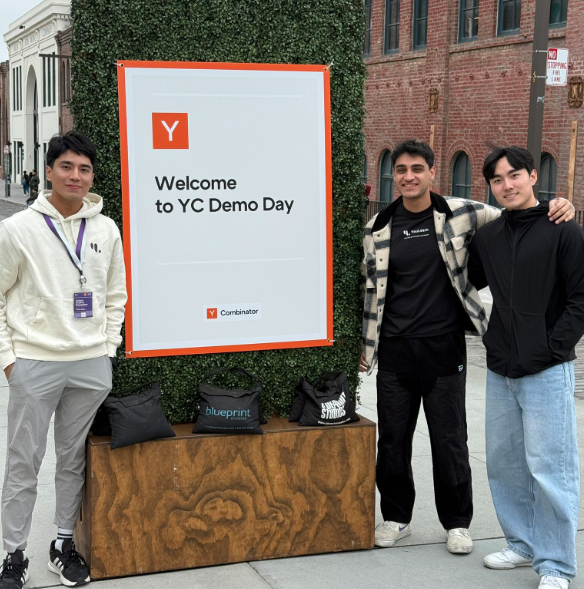
No one could have imagined that this dorm-room experiment—with virtually no budget—would amass over 2 million users within a year, including students as far away as Egypt, Syria, and India. By 2025, the trio had officially earned a spot in Silicon Valley’s top accelerator, Y Combinator. These three college students had truly turned their “impatience” into a business.
“We don’t want to waste any more time watching long lecture videos!”
When asked about the origin of the business, David admits that when they met in their freshman year, they simply wanted to solve their own problem. “At first, we just didn’t want to keep watching those outdated lecture videos, so we created a tool to help understand it quickly. But then we thought: if this feels frustrating to us, could other people be feeling the same way?”
Without any polished business plan, they decided to post their prototype on X, taking a “let’s see what happens” approach. Within a few days, tens of thousands of users were pouring in. For the first time, they realized that students all over the world were waiting for a tool that would enhance their learning efficiency.
Turning Learning Materials into “Interactive” Tutoring
So what, exactly, does YouLearn do? Simply put, it brings dense materials into something you can understand quickly.
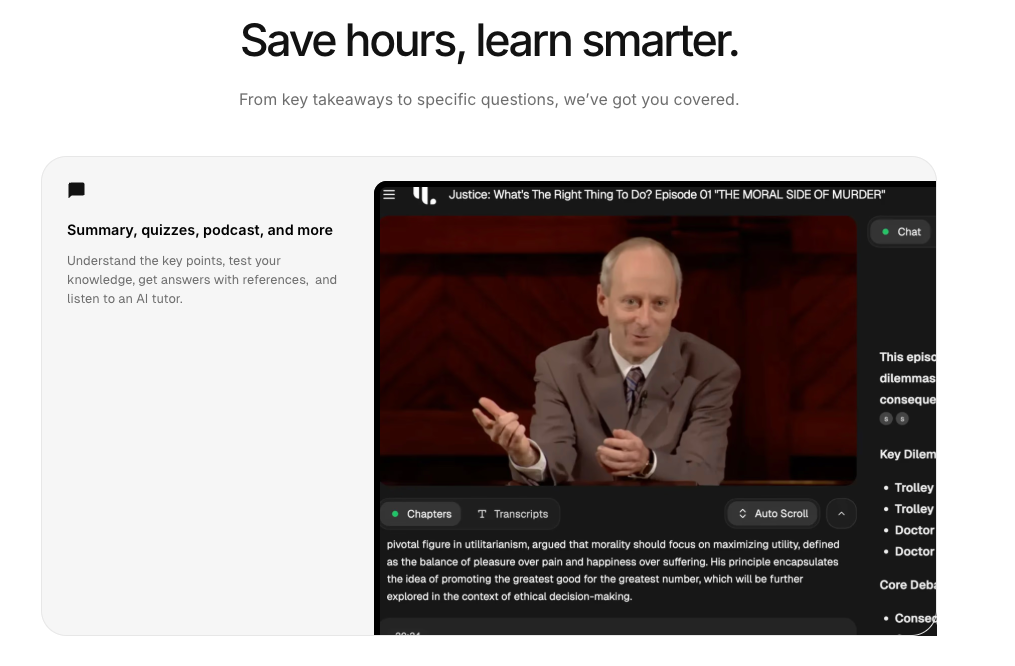
In the past, when reading handouts or watching recordings, students had to painstakingly extract key points on their own. Now, students can simply upload a PDF, class recording, or YouTube link into YouLearn, and the platform transforms that material into an AI tutor that teaches you the topics. Users can ask questions anytime or generate quizzes and flashcards based on the content they just studied to check whether they truly understand it.
“We realized that students crave understanding—not just answers,” David explains. “So the core of our product design is to help people actually learn. Instead of just giving them the answers right away, we encourage active participation.”
How YouLearn Retained 2 Million Users through “De-Friction”
Looking back at the original version of the product, David admits that a lot of things simply didn’t work. Even the most basic functions like file uploads had issues. After multiple attempts, the team realized that it was time to return to a fundamental question: what do users really want?
The answer was simple: they want to start learning right away.
“We found that students didn’t want to spend time figuring out how to use a tool, so we focused on reducing friction,” David says. For example, “uploading materials should be simplified so it can be completed in just two steps, and uploaded content should be processed in real time so users can interact with the AI tutor as soon as they enter the platform.”
Additionally, the YouLearn team discovered that most learning tools are fragmented, requiring students to constantly switch between pages, drastically reducing efficiency. So they consolidated flashcards, notes, conversations, and quizzes into a single space. “Our goal was simple,” David says. “Minimize friction and make learning extremely easy.”
The second key lesson was to simplify their vision.
In the early days, the team experimented with bold ideas and explored multiple directions, but growth was limited. The real turning point came when they decided to stop chasing multiple paths and focus on one thing: observing how students actually used the product.
David admits that when the platform began its explosive growth, he and the team “could see the traffic, but we didn’t know what the users were doing.” So the team began to establish tracking metrics and analytics mechanisms to review user behavior, ensuring that every product iteration was backed by data.
The data revealed several key patterns: students repeatedly asked about the same concepts, spent hours completing quizzes, and even regularly listened to YouLearn-generated podcasts. These signals reinforced the team’s belief that students weren’t just looking for answers but seeking genuine learning opportunities.
However, insights alone weren’t enough. The sample would need to be larger if their hypothesis was to be validated. So the team began to consciously expand their visibility. Understanding that college students were more likely to trust creators than generic ads, they skipped traditional advertising and collaborated directly with micro-influencers on Instagram and TikTok.
(Image source: YouLearn Instagram )
“As students ourselves, we knew where people spent their time and what content kept them watching.” David explains that students were looking for “immediate value”—they wanted to know how they could learn a lesson in an hour or memorize content faster. So instead of talking about the brand’s vision, David and his team decided to demonstrate how the platform could enhance learning efficiency. “This deep understanding of the habits of our peers is what made YouLearn’s growth strategy truly effective.”
It’s a hit! Now what?
The first wave of growth came quickly, and by the end of the school year, YouLearn had about 200,000 active monthly users. Even more remarkably, these users were spread across the globe, with students from Egypt, Syria, India, and beyond proactively sharing about their experiences with the tool on social media.
But the real challenge for the team wasn’t traffic—it was retention.
David mentioned that while college students today try out various AI tools, they often don’t stick with any single one for long. The team started observing user behavior more closely, tracking whether students completed the full learning process or came back for a second session, and where they tended to get stuck. What encouraged them to keep going? “Retention rate” became the core metric guiding product iteration.
The data also revealed that learning needs varied significantly by discipline. For example, David notes that for medical students who need to memorize a lot of information, the system emphasizes flashcards and spaced repetition. Law students deal with dense texts and case analysis, so the platform focuses on breaking down arguments and clarifying relationships between premises and conclusions. In mathematical fields, the platform includes step-by-step examples for calculation problems, helping students verify formulas and models. YouLearn’s intention is simple: reduce the cost of organizing information so students can spend their time actually thinking.
As learning methods were refined for different majors, YouLearn’s retention curve began to steadily rise. Gradually, more users upgraded from the free version to the paid version for a more comprehensive learning experience.
With a solid product foundation in place, external validation followed. In 2025, YouLearn was accepted into Y Combinator and completed its seed funding round, officially stepping onto a bigger stage.
Building An AI Tutor For Everyone
YouLearn also grew out of David’s own learning experiences. Reflecting on his university years, he believes that the most valuable skill he gained was “learning how to learn.”
“I experimented with more efficient ways of learning, such as deliberately spacing out review sessions and forcing myself to actively recall instead of rereading notes,” he explains. When he changed his study approach, the speed at which he could absorb knowledge increased dramatically. “The key is to understand, not just memorize. And if you can apply what you learn, you’ll remember it much longer.” In high school, he skipped hundreds of hours of class to build the e-commerce brands he was starting—while sharpening how he learns so he could move through coursework faster instead of passively sitting through lectures.
This experience has profoundly influenced the direction of YouLearn’s products, and David believes that the future of education will place less emphasis on rote learning and more on critical thinking and comprehension.
As AI reshapes education, David’s vision for YouLearn is bold yet simple: make learning feel as engaging as the shortcuts people wish existed, without skipping the work that makes it stick. ‘The goal isn’t to make learning effortless,’ he says. ‘It’s to make it personalized, just outside your comfort zone, and genuinely fun, so you learn smarter and faster and actually retain it.’
Ultimately, David wants to build an AI tutor for everyone.